

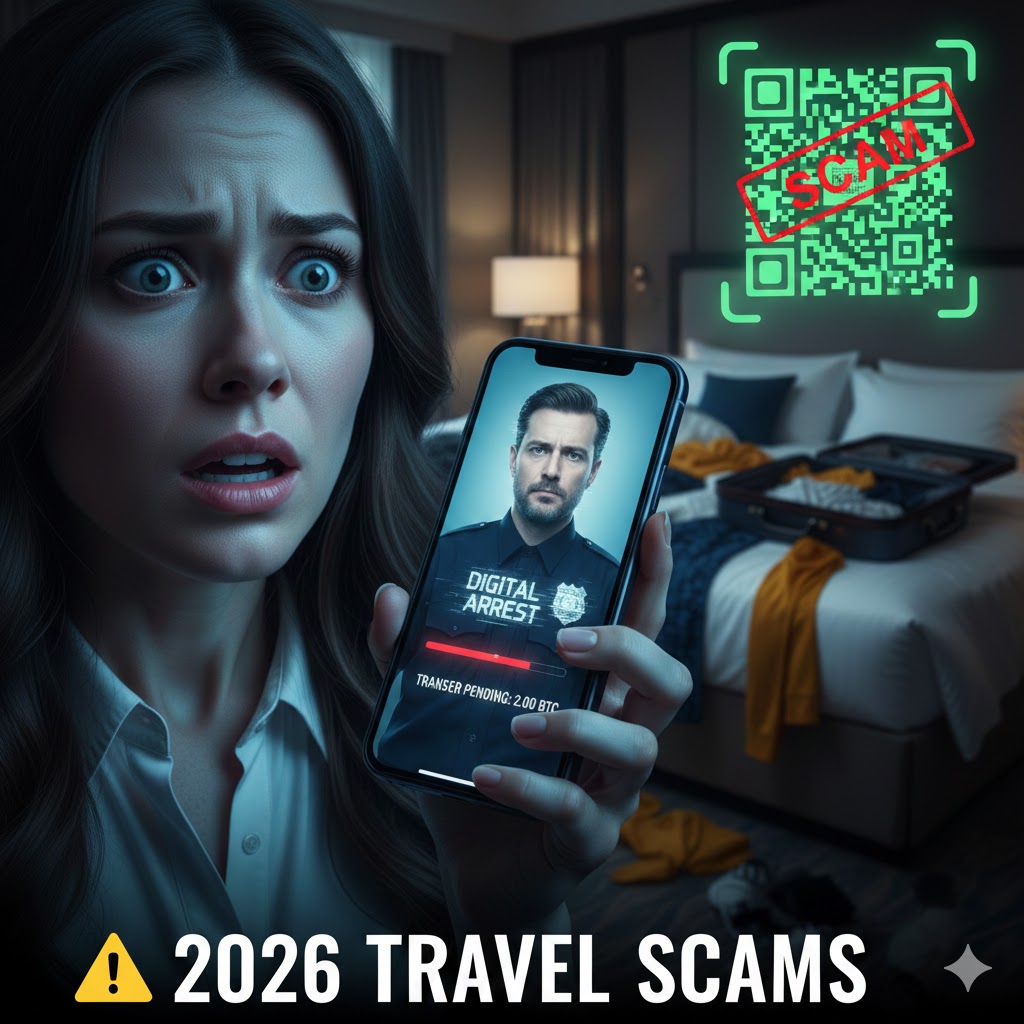
 I have spent years helping travelers plan their dream getaways. Usually, I talk about the best beach resorts or the shortest lines at theme parks. Today, I must discuss something a bit more sinister….SCAMS. As we move through 2026, the world of travel is changing. Unfortunately, scammers are changing with it.
I want your only “horror” stories to come from a movie, not your bank account! Scammers in 2026 use advanced tech to catch even the most seasoned travelers off guard. From AI-generated voices to “digital arrests,” the threats are getting smarter. But don’t worry—I have done the research for you.
Here is everything you need to know about the newest travel scams of 2026 and how you can protect your hard-earned vacation.
1. The Rise of the AI “Voice Clone” Scams
This is perhaps the most terrifying trend I have seen in 2026. Scammers only need a few seconds of your voice from a social media video to “clone” it using Artificial Intelligence.
How it works: You are enjoying your vacation abroad. Suddenly, your parents back home receive a call. The voice on the other end sounds exactly like you. “You” claim you have been in an accident or arrested and need money immediately. Because the voice sounds perfect, your loved ones panic. They might send funds before checking the facts.
-
How to avoid it: Establish a “Family Emergency Password” before you leave. If a loved one gets a suspicious call, they should ask for the secret word. If the caller cannot provide it, hang up immediately.
2. “Digital Arrest” and Video Interrogation Scams
This scam relies on total intimidation. It has moved into the mainstream for 2026.
How it works: You receive a call or video invite from someone posing as a “Customs Official” or “Police Officer.” They claim they found illegal items linked to your passport. To make it believable, they use AI deepfakes to show a realistic office. They might keep you on a video call for hours. They threaten you with jail time unless you pay a “settlement fee” via cryptocurrency.
-
How to avoid it: Real law enforcement will never call you to demand money over the phone. They will never ask for payment in crypto or gift cards. If you get a call like this, hang up. Contact the official government agency directly through a verified number.
3. Phony “AI-Generated” Booking Site Scams
In 2026, scammers can build professional-looking travel websites in minutes using AI. These sites look nearly identical to big names like Expedia or Airbnb.
How it works: You find a “too-good-to-be-true” deal on a luxury villa. The photos are stunning. The reviews look great because AI actually wrote them. You pay in full, but the property does not exist. You only find this out when you arrive at the address with your luggage.
-
How to avoid it: Always look at the URL. Scammers often use “typo-squatting,” like Airbnnb.com instead of Airbnb.com. Better yet, book through a verified travel agent like us at Gallivanters. We use secure portals that scammers cannot touch.
4. QR Code “Quishing” at Tourist Spots
We all love the convenience of QR codes for menus and maps. However, in 2026, “quishing” (QR phishing) is a major threat in busy tourist hubs.
How it works: Scammers place a sticker with a fake QR code over a real one at a monument or restaurant. When you scan it, your phone goes to a fake site. It looks like a payment portal. Once you enter your details, they have your credit card info. They may even install malware on your phone.
-
How to avoid it: If a QR code looks like a sticker, do not scan it. Type the restaurant’s website directly into your browser instead.
5. The “Midnight Hotel Desk” Call
This is a classic scam with a 2026 tech twist.
How it works: Your hotel room phone rings at 2:00 AM. A “front desk clerk” tells you there is a problem with your credit card. They apologize for the hour. They say they need to re-verify the numbers to avoid checking you out early. Since you are tired, you might read the numbers off.
-
How to avoid it: Never give credit card info over the room phone. Tell them you will come down to the lobby in person. A real hotel will always wait for you to come to the desk.
6. Public Wi-Fi and “Evil Twin” Hotspots
While 5G is everywhere in 2026, many travelers still hunt for free Wi-Fi to save on data.
How it works: You see a network called “Airport_Free_Wifi.” It isn’t the real network. It is a laptop belonging to a scammer sitting ten feet away. Once you connect, they can see every password and credit card number you type.
-
How to avoid it: Use a VPN (Virtual Private Network) every time you connect. It encrypts your data so hackers see nothing but gibberish. Use your mobile carrier’s data plan if possible.
2026 Travel Security Checklist
| Scam Type | Red Flag | Best Defense |
| AI Voice Clone | Urgent request for money | Use a family “Secret Password” |
| Fake Booking Site | Price is 50% lower than others | Book with a pro travel agent |
| Digital Arrest | Demands crypto/gift cards | Hang up; it is always fake |
| QR Codes | Code looks like a sticker | Manually type the website URL |
| Room Phone Call | Asking for card info at night | Go to the front desk in person |
Why a Travel Agent is Your Best Defense in 2026
You might think travel agents are just for booking flights. In 2026, we are your security detail.
When you book a package through Gallivanters Vacations, you get a shield against these scams:
-
Verified Vendors: I only book through wholesalers and hotels that I have personally vetted.
-
Secure Payments: Our payment systems use industry-standard encryption. Your card info stays safe.
-
Pulse of the World: We keep up with the latest scams so our clients don’t have to.
Are you ready to explore the world without the worry?
Follow us on Facebook for expert tips & incredible deals. Let’s make your travel dreams come true at Gallivanters.